

A Piece of String

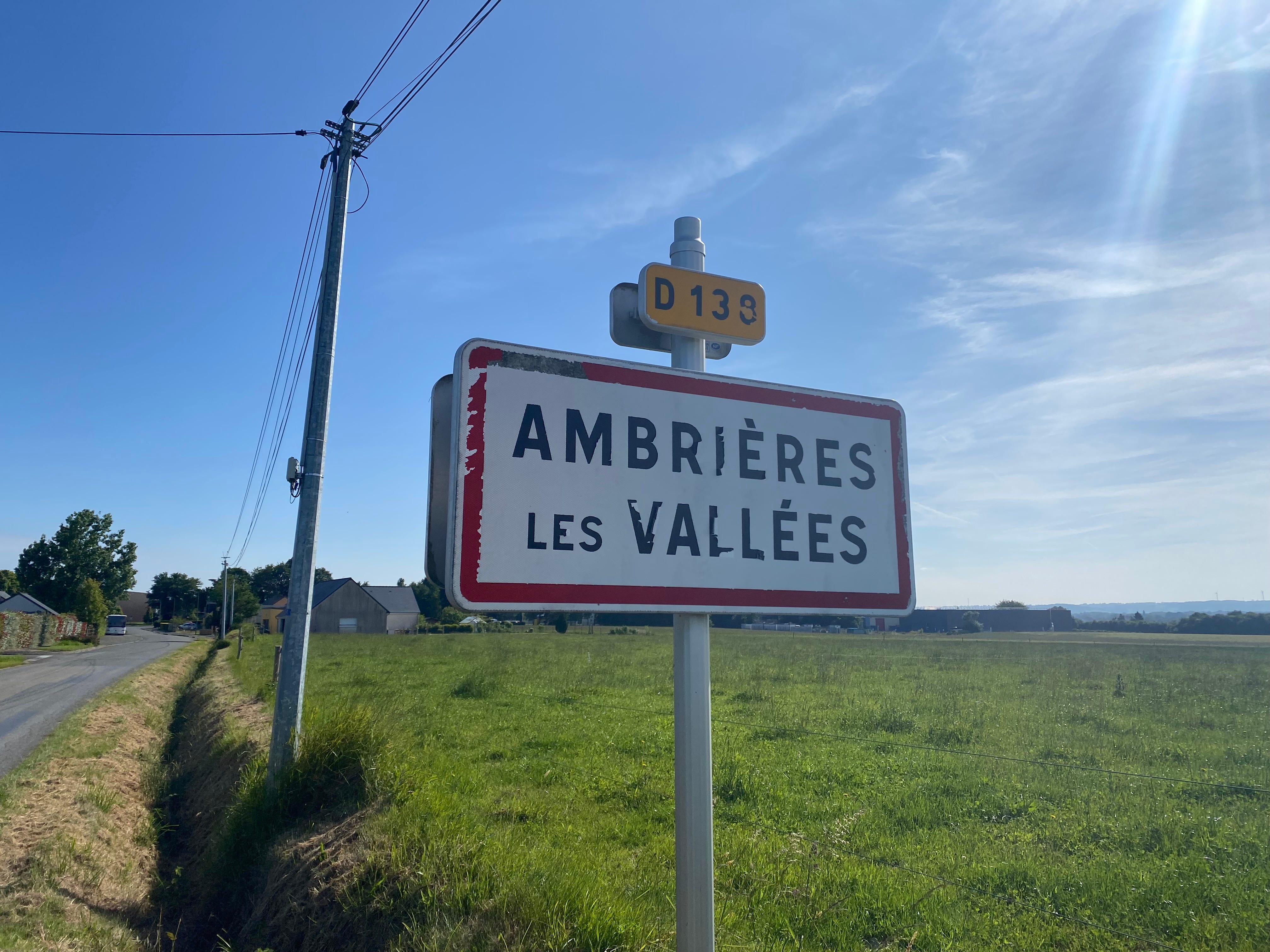
I got much of this from my grandmother at different stages of my life. When I was fifteen she told me that when I was seven I reminded her of Victor Burgeot, who at that age came with his older brother, Adolphe, appearing suddenly on a small holding on the outskirts of our village. She did not know how that had come about, and she wasn’t sure of the two brothers’ exact origin, but it was somewhere in Normandy, near, she said, the Loire Valley. Victor had a toothy grin, his smile at its most mischievous whenever an adult spoke to him. The family that had taken them in were village grandees. Francome, as my grandmother referred to him, was a merchant banker, who travelled by train to London every day. Adelaide, his much younger wife, looked after their two-year-old, a girl they had named Marie-Anne. Adelaide did everything around the small holding, rounding up the sheep whenever they roamed, and throwing sticks for Millie, the family pet, a lively, happy Dalmatian. Adelaide did her bit for the war effort, with produce from the Francome kitchen garden and a much bigger allotment, the bulk of it distributed to the village’s war widows. Clothes she no longer wore went the same way. There was a lot she did for charity, as volunteer. If the boys didn’t know it, they had landed on their feet.
What little English the Burgeots had come to England with, improved with frightening rapidity. In just a few months their grasp of the vernacular was adequate for everyday conversation, from quite complex domestic exchanges to the absorption of good paternal instruction Francome lectured with, vicariously. Largely through him their easygoing Catholicity was replaced by a sense of thrift, underpinned by his own Protestant work ethic. The boys were polite, well behaved, seldom got into trouble, went to school and were above average in both marks and performance, according to their teachers. That was all I heard about them until I was twenty-three. At that time I worked for a music publisher in the English equivalent of Tin Pan Alley. My job title, Song Writer, was more apparent than real in the work I actually did, which involved no more than rearranging someone else’s lyrics. What I spent these wasted hours doing was bound up in the avoidance of copyright violation, with the wrapping of ancient, sugary sentiments in a later current idiom. Most of what I produced was set to music, a pounding piano mostly, but not much of it entered the studio system. Of material that did, I can boast only one hit, which ended up paying 45-rpm salespeople out on the road more than I ever earned.
My grandmother said I should get a proper job. She reflected that at my age the Burgeot brothers had already got their own business, with Francome’s financial help I imagine. I have spoken about it to the Francome daughter, Marie-Anne, which is how I gleaned much of what follows. By now the war was long over. With Nazi defeat, Adolphe and Victor had returned to France, but to a new location – Mayenne – where their parents had moved and M. Burgeot ran a restaurant business. At eighteen Marie-Anne au paired in Paris, and with the two families still very much in touch visited Mayenne often. Likewise the boys made brief return trips to England, on one occasion with their mother, she of robust peasant lineage, who was shown around the house and village, and had the school pointed out – places the brothers had lived, played and learned throughout the occupation. A chance remark led Francome to ask further questions regarding an uncle – a furniture-maker – who had tried to induct his nephews into his atelier, but only Adolphe had shown interest, and an aptitude for joinery. Victor, who liked driving, said why not export some of his chairs, tables and cabinets to the English. Francome liked that idea, and made space among his extensive outbuildings for storage, and soon Victor was bringing in to the southeast of England not just his uncle’s furniture, but a glut of French antiquity. I can’t speak for the provenance of much of what Victor traded in, and can quote only from an original catalogue Marie-Anne showed me, which she kept in a drawer with a crush packet (it was green, and the brand of cigarette that Victor smoked was St Michel). The packet was empty of course, but still with the smell of tobacco.
In my late twenties, about a year before she died, my grandmother told me how Victor (in his late twenties) had become a specialist in French antique furniture, and talked knowledgably of the craftsmanship that had gone into it, with the sophistication of materials and the techniques synonymous with its production. He dealt in lesser known ébénistes as well as period examples ranging from the rococo of Louis XV, through Second Empire decadence to the Belle époque. Those outbuildings on the Francome estate had been replaced by warehousing somewhere in Plymouth, where I now also happened to work, as bookkeeper to a smoked-fisheries firm, which paid me little more than I had earned in Tin Pan Alley. It was a proper job, yes, as my grandmother acknowledged, but did it amount to anything, really? By contrast Victor’s warehouse was stocked with ormolu-mounted ebonised side tables, Louis XV meuble d’appui (one in a pair of sphinx tripod stands), a malachite pedestal, a giltwood sofa, Art Nouveau steel vitrines, and a long list of et ceteras. At that point I contemplated the antiques trade for myself, but could never raise cash enough to bid for a first significant object – something in the numismatics line perhaps, or a medal. I stuck with bookkeeping until I retired. I returned home, to a small house with a rear garden backing onto woodlands, not far from where my grandmother had lived. Her house and land had now been parcelled up into two plots, and a second house stood in what had been her apple orchard.
My next discovery, got out of curiosity, was that Marie-Anne was the Francomes’ sole survivor, and – now old and frail – still lived in that part-timbered, mock-Tudor freehold on the village margins, tucked in off the main road into what had become a small town. She didn’t keep sheep, and there was no dog, no Dalmatian. When I visited I noted the furnishings and décor had remained static with the era of her inheritance – the late ’90s, early 2000s. She showed me Victor’s catalogue and crushpack, and only now revealed that he and Adolphe were her cousins. She showed me round the outbuildings, last resting place of a rusted apple press – not more. She told me that Victor and Adolphe had gone on as business partners into their sixties, but had had a falling out over a property deal, with Adolphe more or less advising his solicitor that Victor had shown criminal intent. Victor’s riposte was that Adolphe had always been selfish, greedy, avaricious, with a distrust of others verging on paranoia – a generally low opinion of humanity that now also included his own flesh and blood, his brother. Marie-Anne had kept out of it as much as she could, but heard before the two brothers did that their widowed mother, who had returned to live in Ambrières Les Vallées, was preparing for her own mortality and was disposing of furniture now seldom in use. That included a gateleg dining table that as a five-year-old boy Victor had tied a piece of string to, somewhere underneath it, which his mother thought was still there. Apparently he paid a visit. It’s said he approached the house on a warm June day, along its sunlit street. With a jolt of excited sentimentality he saw through the open French doors, behind a ripple of part-open curtains, and cloaked in interior shadow, his parents’ old utility dining table, of no value except for the memories it encapsulated.
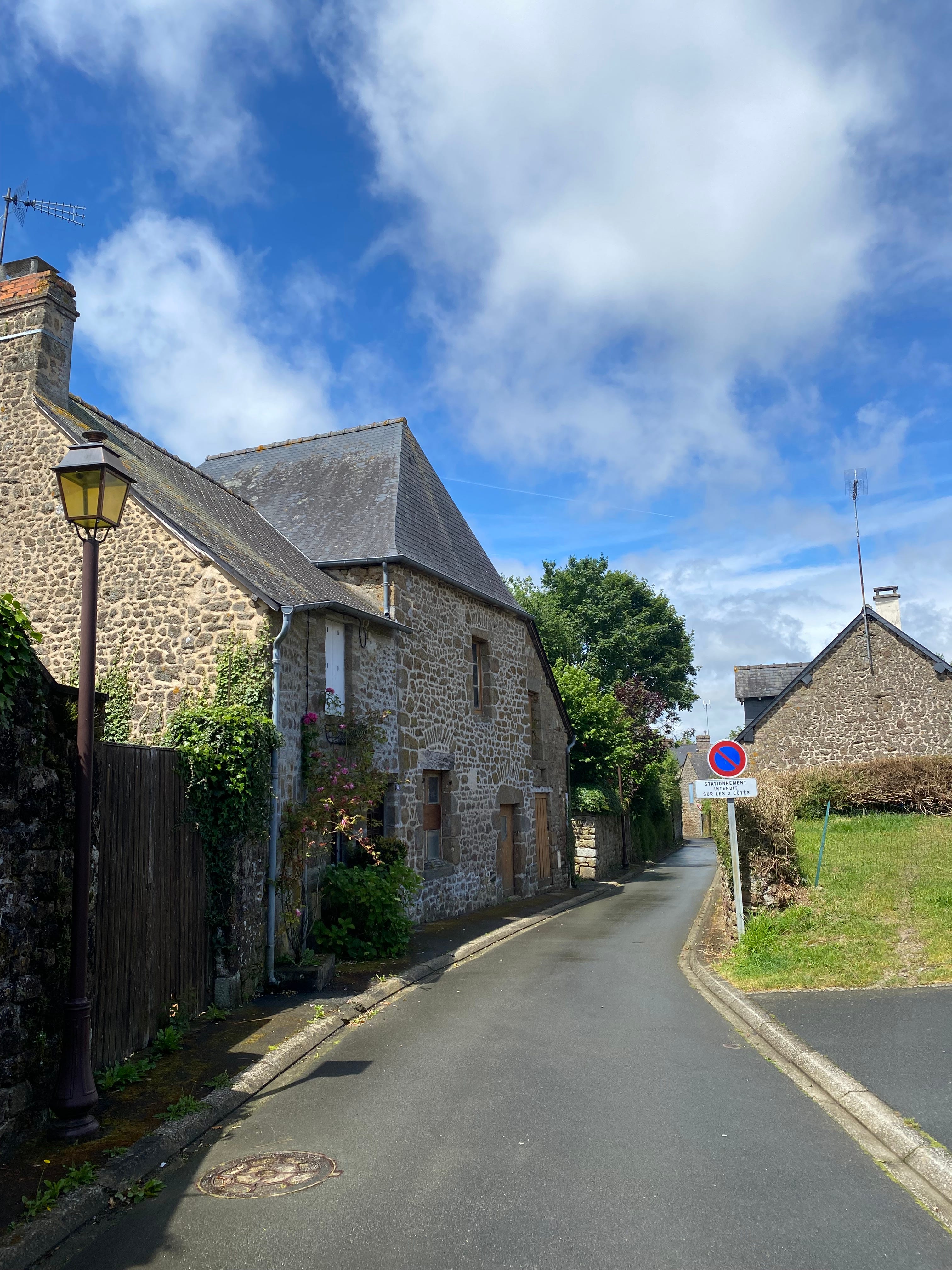
But as things turned out, when he’d entered the house, and crouched beneath the table, there was no piece of string.
@petercowlam, @pjcowlam